Fear, Faith and The Other in 28 Years Later: The Bone Temple
The following is a repost of one of my Medium articles. I'm reposting as I've left Medium and I want to keep all of my writing together.
The zombie genre has never shied away from reflecting our deepest societal fears back at us. The 28 franchise is certainly no exception to this, with Danny Boyle and Alex Garland’s 2002 horror classic, 28 Days Later, exploring themes of violence, social decay, masculinity, and human connection. Five years later, the more action-centric 28 Weeks Later offered themes of guilt, survival and sacrifice, along with heavy criticism of American foreign military intervention. So, with nearly two decades and a global pandemic having passed since then, it’s no surprise that the new 28 Years Later trilogy returns with another fresh take on modern society’s current ills. And where last year’s 28 Years Later provided a slower, more intimate allegory for coming of age in an isolated, increasingly divided post-Brexit Britain, 2026’s 28 Years Later: The Bone Temple shows us in gory detail the consequences of that divide. Specifically, the film utilises the mechanics of ‘Othering’ to mirror the rise of right-wing populism in the UK and explore themes of faith, isolation and division.
Spike: The Sanctuary of Belonging
Othering is the act of defining an individual, group, or set of characteristics as being in direct contrast to an ‘us’. This can often be done through factual distortion and misrepresentation, with the Other being viewed as inferior and even a threat to that ‘us’. From the very first scene, Spike is presented as an Other in contrast to Sir Lord Jimmy Crystal and his Fingers, otherwise known as The Jimmies. Picking up almost directly after the previous film, Spike is forced to fight Jimmy Shite to the death for a place within the cult. He is often shot from a high angle, with the audience looking down on him, contrasting with the low angles framing Jimmy Shite, and each amplifying Spike’s youth, vulnerability and small stature as an Other to Jimmy Shite’s power, experience and height. His Otherness shines through in many other ways throughout the scene too; his fearful panting contrasts with the Jimmies’ delighted laughter and his clothes stand out against their uniform. Finally, once the fight is over, he is also much less willing than the others to watch the man he just stabbed in the thigh bleed to death in front of him.
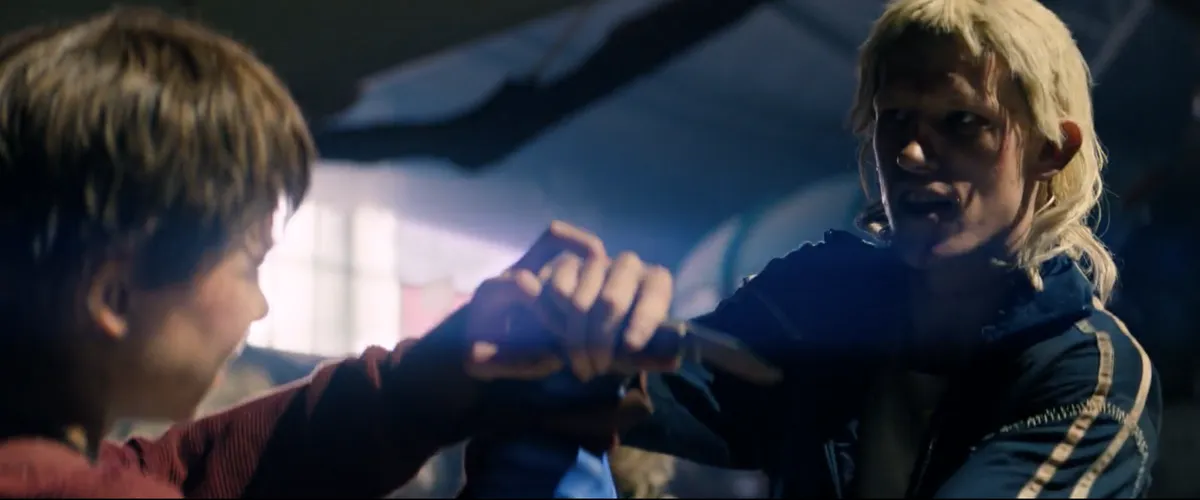
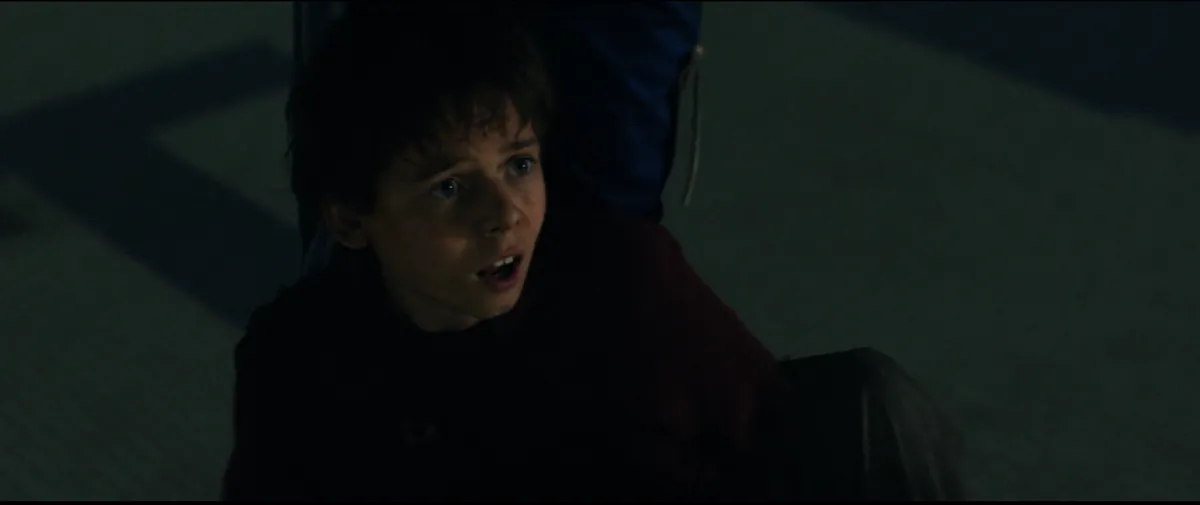
Even after gaining his place among the Jimmies, Spike continues to stand out as an Other within the group. Throughout their encounter with other survivors, he looks fearful and ashamed, and just as confused as they are when the Jimmies partake in Teletubbies jokes and cult practices. He is also the only one unable to stomach the group’s sadistic ‘charity’. Later, when asked to retrieve one of the escaped survivors, he instead asks her to take him with her, which she refuses. However, instead of then seizing an opportunity to escape alone, Spike returns to the Jimmies. He likely realises that the risks of solo survival, from recapture and torture by the Jimmies to attacks by the infected, are much greater than the dangers of a group with a sadistic cult, a group that can still provide protection. Therefore, staying with the Jimmies is currently his best option, a notion that is also reinforced by Jimmy Ink. Despite also displaying some scepticism of the Jimmies, such as apathy towards the cult’s jokes and empathy towards Spike’s fear, when Spike tells her “Anywhere’s better than here”, she replies “I’ve been to anywhere. It’s not.” This suggests that she believes life with the Jimmies is as good as it gets, or at least that everywhere else is just as bad. Spike and Jimmy Ink’s situation mirrors how many in real life become involved in extremist groups. While being outside of a group doesn’t risk attacks by zombies, studies have still shown that social isolation and lack of community increase susceptibility to extremist recruitment. Even without the life-or-death stakes of an apocalypse, people are still more willing to be in extremist groups than survive alone. And much like Jimmy Ink, once part of such a group, you may be less incentivised to leave and more likely to assimilate, regardless of if you believe its message.
Sir Jimmy: The Perversion of Faith
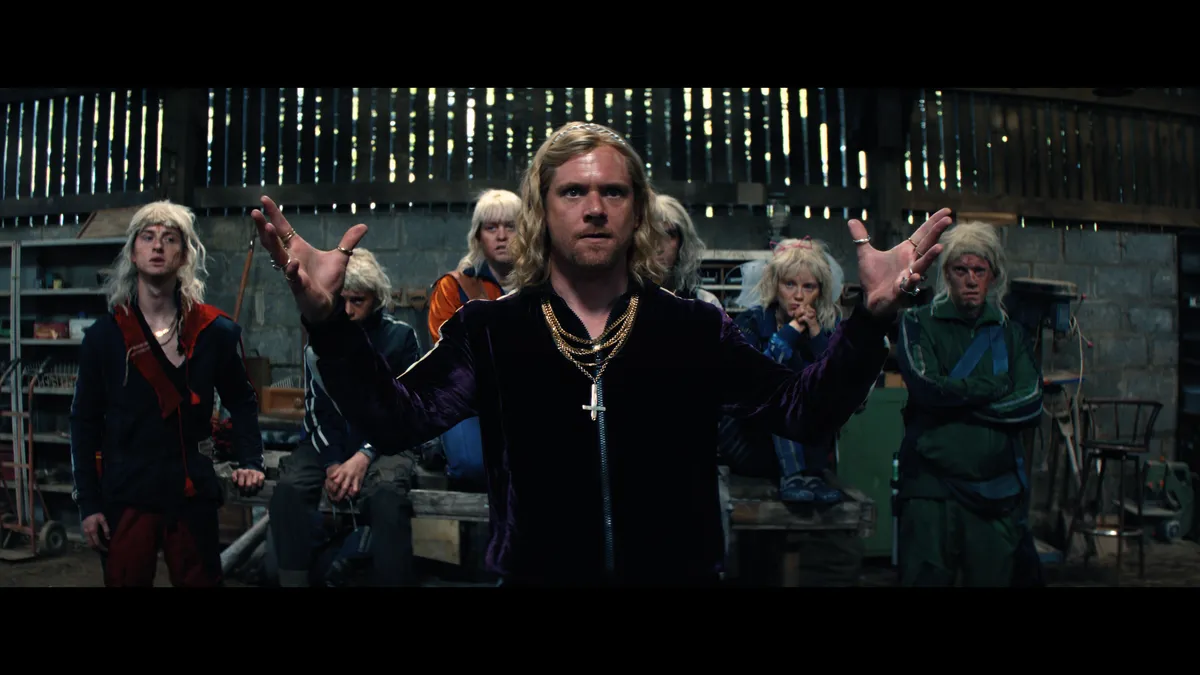
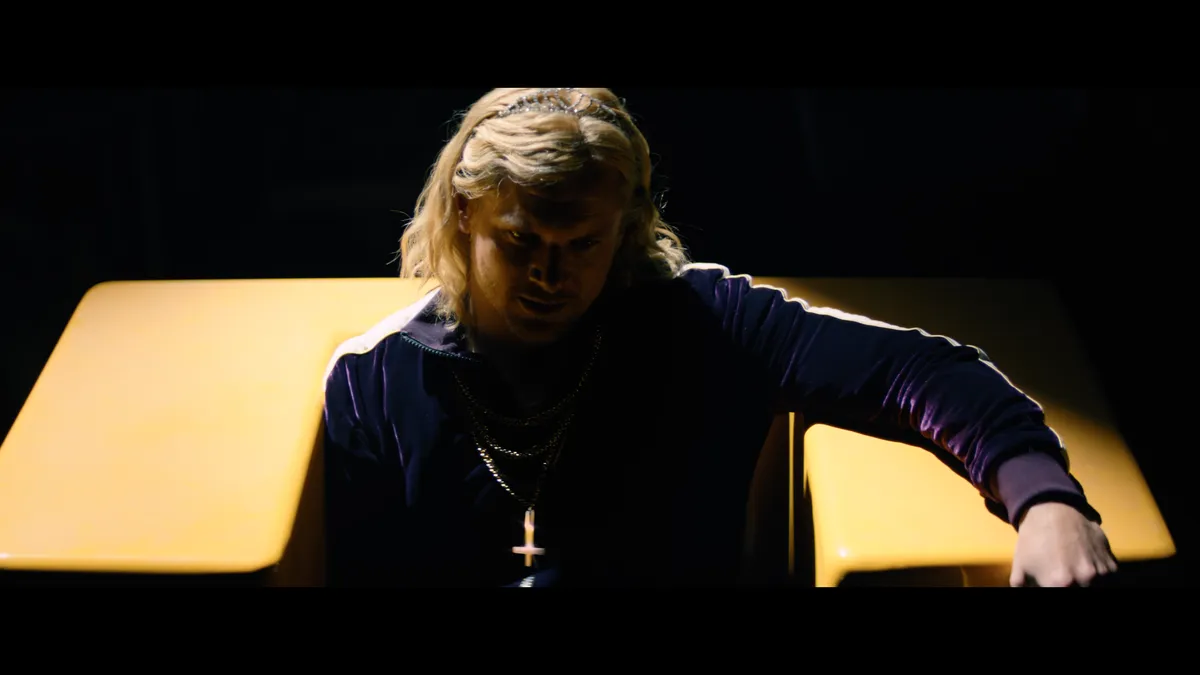
Along with fear of repercussions and isolation, extremist groups also foster loyalty and obedience from followers in a number of other ways, including through us-vs-them narratives and perversion of religion, both tactics that are employed by the Jimmies’ leader, Sir Lord Jimmy Crystal. In his mock sermon in the barn to the captured survivors they met earlier, Sir Jimmy declares himself as the favoured son and heir to Satan, or Old Nick, and his followers as his disciples. From this sermon, we see that the rest of the world is the Jimmies’ Other — the infected are demons, and any other survivors are souls that need to be delivered to Old Nick through ‘charity’, meaning death by torture. Sir Jimmy also claims to be the only one who can talk to Satan, and we see him wield this ‘power’ during a number of scenes where he asks Old Nick for guidance on what punishments to deliver or simply to witness the violence committed by the group. By Othering the outside world and positioning himself as a satanic prophet, Jimmy creates a power dynamic where his followers rely solely on him. Their faith and Satan’s mission (fed to them through Sir Jimmy) can provide them with answers and purpose in a world that otherwise seems terrifying and meaningless. And if everybody else is the enemy and the Jimmies are the true believers, then no matter how repressive and terrifying the cult is, leaving it would seem to carry both physical and spiritual ramifications.
This type of group dynamic could provide a window into what future, or even current, political dynamics may look like in Britain. While faith perversion and manipulation have long been used to strengthen us-vs-them narratives in cult settings, such tactics are increasingly being used by right-wing, national populist groups in the UK, many of whom have begun making reference to ‘Judeo-Christian values’ in political speeches. By fusing together faith and nationality, they become one interlinked, sacred identity. Thus, any outsider, Other or critic becomes not just a political opponent, but a spiritual threat. What’s more, even those who are British can be positioned as an ‘enemy within’ if they threaten the right’s ascent to power. Such intertwining of faith and politics also begins to pave the way for individual leaders to claim divinity. And much like with the Jimmies and their ‘charity’ in The Bone Temple, [once a single leader is placed in an almost God-like position}(tab:https://www.bbc.co.uk/news/articles/c20g1zvgj4do), their followers are primed to obey orders even if they conflict with personally held moral beliefs, otherwise known as authoritarian submission.
Samson: The Subversion of the Other
Of course, within the zombie apocalypse genre, it’s the zombies themselves that have always represented the ultimate Other to humans. Previously, distinctions between us and them could be made in a number of ways: they are dead, we are alive; they are slow, we are fast; they are mindless, we are conscious, to name a few. However, when the rage-virus-fueled ‘zombies’ of 28 Days Later burst onto the scene, these boundaries blurred; suddenly the monster was fast, clever and not even dead. The Other was now our own animalistic instincts and potential for anger and violence, as seen when Jim, in a bid to save Selena and Hannah from Major West’s soldiers, lets loose on a rampage so violent that Selena almost mistakes him for one of the infected. And so, rather than representing overarching external societal fears, such as consumerism or conformity, these new zombies came to represent internal fears; the Other within us that we look to reject.
Fast-forward to 2026, and the continuation of this theme is where The Bone Temple is at its most bold, not only blurring the lines between human and infected, but completely turning the Other on its head. This is done with the aid of returning alpha, Samson. We first see him again hunting a lone survivor in the woods. The camera switches back and forth between the survivor, injured and vulnerable, and Samson, who looms over him. At first, we see the survivor as he is, uninfected and terrified. Then, through the aid of extreme close-ups, a distorted soundscape and blood-red vignette, we switch into Samson’s point of view. Here, the man has transformed into a monster, with dirty pale, paper-white skin and bloody eyes and mouth, roaring threatingly. Samson then moves in for the attack. By granting the infected a subjective viewpoint, the hierarchy between infected and non-infected is flipped; rather than infected zombie being the threatening Other and non-infected human being the threatened in-group, the roles are reversed. And if the infected feel threatened, it may explain why they feel the need to attack their Other.
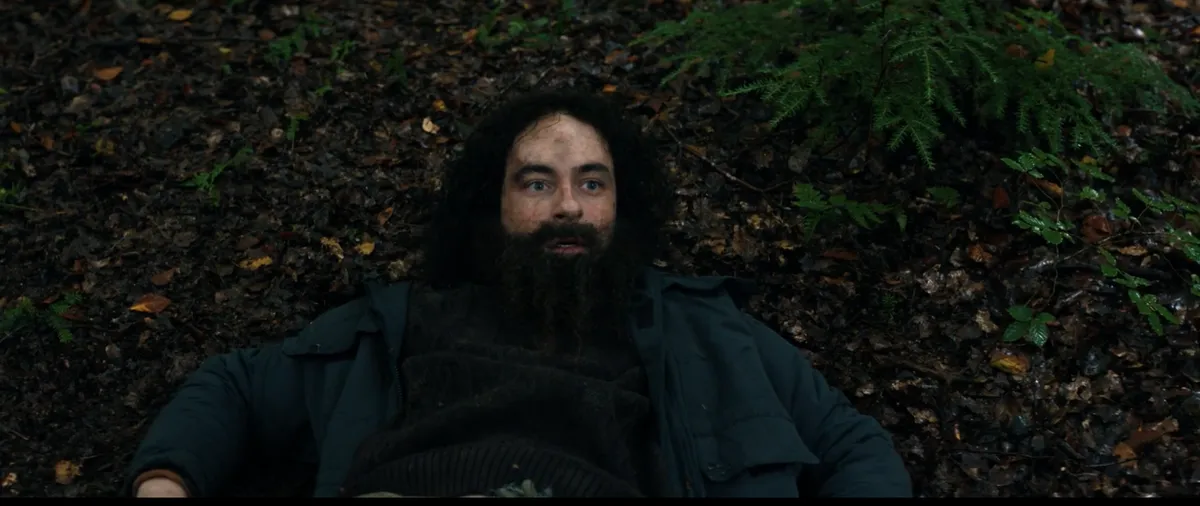
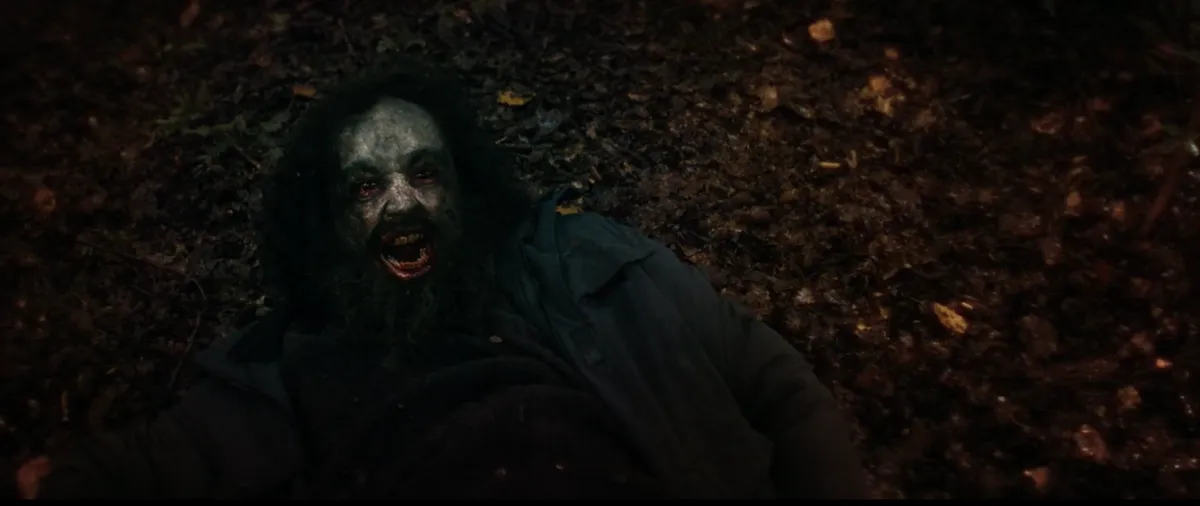
This new perspective adds yet another layer of meaning to the 28 franchise’s rage zombies, one that can give not only an insight into Britain’s ever-increasing polarisation, but also an antidote to it. By showing the villain that was previously Othered as the ‘in-group’ and previous protagonist group as the new Other, we see that groups we may have previously Othered and seen as a threat may be doing the same to us. Polarisation comes from echo-chambers where each side is Othering, attacking and protecting itself from the threat of outside groups. Therefore, The Bone Temple invites us to view our own Other through a new lens where we understand that we are also being seen as a threat to them. This, then, calls into question whether the constant cycle of attacking the Other side is the ideal solution to an infected (or divided) world.
Dr Kelson: The Power of Empathy
This empathetic stance is exactly the road taken by the returning Dr Kelson. In The Bone Temple, Kelson represents the calm, empathetic, rational opposite of Sir Jimmy’s erratic, violent chaos. The two are portrayed in complete contrast, with the bright, wide-angle exterior shots showing Kelson emphasising his calm, rational openness, and the tight, dark close-ups showing Sir Jimmy signifying his chaotic, closed-off world. Thus, where Sir Jimmy seeks to destroy, Kelson seeks to heal. Therefore, he treats the infected with curiosity and empathy, rather than fear and violence, and specifically, rather than Othering Samson, he seeks to understand him in the hopes that this will, in turn, teach him more about the infection and its possible cure. Kelson’s scenes with the alpha are highly distinct from those of other survivors and infected. In their first encounter in The Bone Temple, rather than a fast-paced, life-or-death action sequence, we get a slow and deliberate stand-off in which we discover that Samson has become addicted to the morphine Kelson has been using to subdue him. This leads to the doctor regularly issuing Samson a collection of medicines as well as attempting to find out if the person he was prior to infection still lies dormant somewhere inside. This curiosity eventually pays off; Samson is less violent, seems to be in less pain, and is eventually able to produce speech.
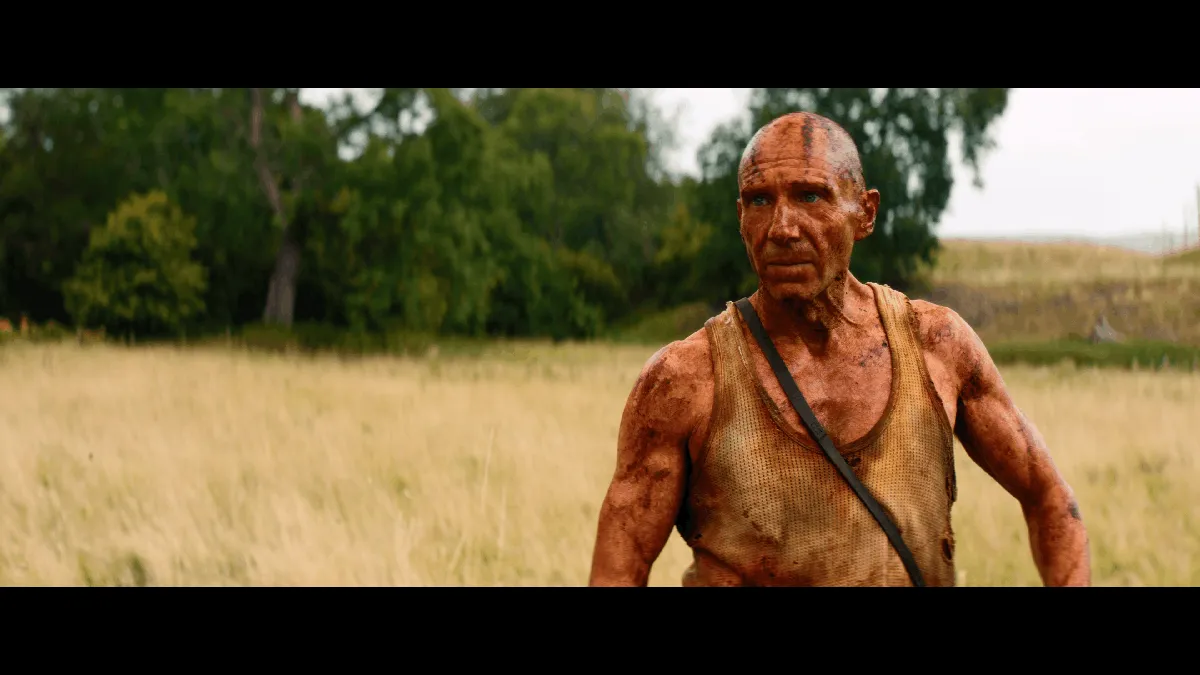
In his now half-infected-half-cured state, Samson makes his way back to the abandoned train where he killed Erik in the previous installment. During a hallucination of a pre-outbreak, pre-infected memory, we see a subversion of Samson’s initial point-of-view shot from the film’s beginning. This time, the non-infected people from his hallucination are revealed to be infected rage zombies who then attack him. This also shows a change in dynamic between Samson and the other infected, where he was once their leader, he is now their enemy. Such a change mirrors how real-life experts believe you can move people away from extremist beliefs: by reminding them of who they were beforehand. If we see the infection as a metaphor for an isolated, extremist group, Samson has now remembered who he was before ‘joining’ this group. He has realised that the Other of that group, the non-infected, are not necessarily a threat to him, and he now lies somewhere in between, not quite infected but not quite cured. And in any cult or extreme group, just one ounce of questioning is a threat to the cause, and so Samson must be expelled from the group, or in the case of the 28 world, killed.
Final Thoughts
28 Years Later: The Bone Temple once again takes the familiar zombie-apocalypse genre and turns it into a window through which we can observe the fears and issues plaguing modern-day Britain. By utilising Othering, the film shows how fear and isolation can funnel vulnerable individuals into extremist groups. Furthermore, letting us see through the eyes of an infected flips the classic human vs zombie-Other dynamic, reminding us that we are all someone’s Other and exposing the fragility of any us‑vs‑them worldview. The story also hints at a hopeful antidote: Dr Kelson’s compassionate approach suggests that empathy and a reminder of one’s pre‑radical self can break the cycle of hatred. In an era of rising polarisation, the film urges us to move beyond binary divisions and to look at our ‘Others’ with curiosity rather than contempt.