Obsession and the Monstrosity of the 'Nice Guy'
A little while ago, I finally got around to watching Obsession, the new low-budget supernatural horror from YouTuber and director Curry Barker. Usually, I'm quite sceptical going into films with extensive hype surrounding them, having been disappointed in the past. However, having managed to avoid spoilers and with no idea of even the concept itself, I came away scared, excited and itching to dissect every longing stare, shadowy face, and snap of a willow branch this film had to offer.
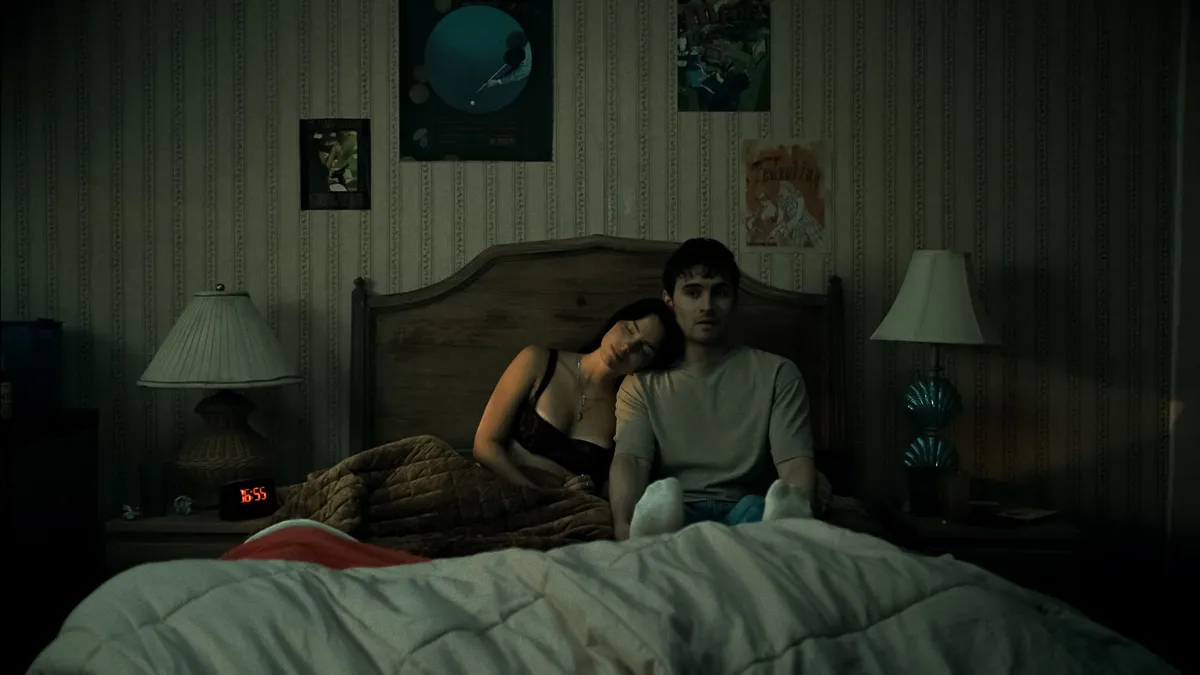
For those that need a quick refresh, Obsession follows Bear, a meek and lovelorn record store employee who makes a wish on a novelty toy for his crush, Nikki, to love him more than anyone else in the entire world. Of course, Bear doesn't expect the wish to even work, let alone take hold of Nikki in unimaginably horrific and violent ways. The film is phenomenally acted, with Inde Navarrette in particular giving a haunting performance that already warrants a place in the Scream Queen hall of fame. And despite (or perhaps because of) the film's simplicity, it deals with its themes powerfully and effectively.
"So she's just stuck like this forever?"
Obsession's underlying messages can be interpreted in a variety of interlinking ways. Curry Barker himself intended to write a film about codependency, and there's clear allusions to domestic abuse and mental health in relationships, including relationship OCD. However, a stand-out theme for many, including myself, is how the film portrays patriarchal entitlement and control.
These subjects have a rich history in horror cinema, and Obsession is only the latest in a long line of brilliant films to tackle them. An early example (although certainly not the earliest) is The Stepford Wives, first written by Ira Levin in 1972 and then adapted for screen in 1975. The story depicts free-thinking, intelligent women who are replaced with mindless doppelganger robots solely dedicated to home-making and completely compliant to their husbands. During a time of increasing women's liberation, it satirised men's fears about feminism, namely losing control over women, and showcased their sense of entitlement over their wives' time, bodies and (domestic) labour.
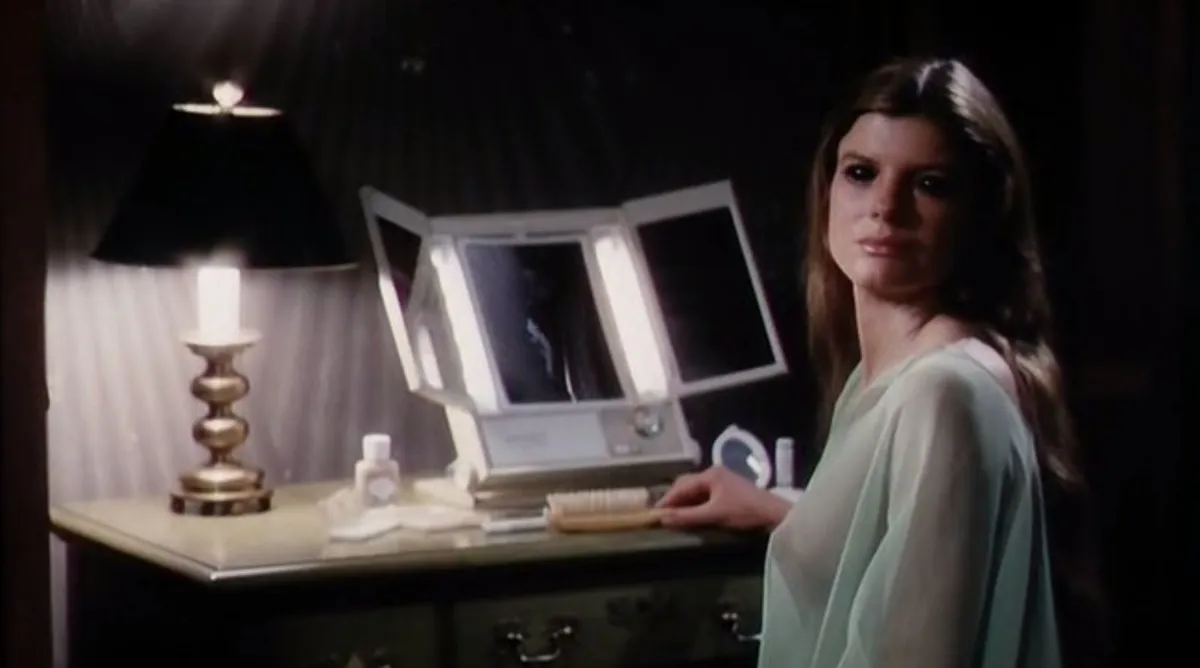
Fast-forward to the early 2010s and the release of Gone Girl, the novel (and later film adaptation) that Gillian Flynn wrote in order to "challenge the notion that women are naturally good". Although a thriller rather than a horror (and not without its faults), Amy's 'cool girl' monologue exposed the real-life pressures women faced to constantly satisfy male fantasies while never experiencing or displaying any negative or undesirable traits or emotions. Popularised through tropes such as the 'manic pixie dream girl' of the '00s, this fantasy revealed that many men felt entitled to the 'perfect' woman, one who addressed all of their needs while not requiring any reciprocation of that emotional labour. It also revealed that patriarchal control can be self-policing - women will both ensure they fit the mould of 'cool girl' and criticise those who don't. The current decade has also already seen some brilliant exploration of these themes, with The Substance exploring self-policed patriarchal control of the body, and Companion once again showcasing patriarchal entitlement to the perfect partner and control of women's behaviour.
"Have you ever actually, like, flirted with Nikki?"
Obsession takes a slightly different approach than these films in showcasing these topics. Rather than wholly or even partly depicting the effects of patriarchal entitlement and control from the woman's perspective, the entire film is seen from the point of view of Bear. In other words, the audience is only ever shown the horror that Nikki experiences through the eyes of the man responsible for it. And yet despite this, the hideous nature of Bear's actions (and inactions) towards Nikki and the sheer terror of what she experiences are still fully understood by the viewer. Ultimately, even if he doesn't intend to be, Bear is the villain of the piece, and few people can walk away from this film still truly rooting for him.This is because there's less and less doubt as the film goes on about Bear's intentions, and his inability to take responsibility for his actions becomes harder to explain away as ignorance.
At first, Bear is presented to us as a typical romance movie stereotype - a 'nice guy' who's unlucky in love and pining after a woman who's none the wiser. On the surface, Bear's opening monologue and his subsequent willingness to go out of his way for Nikki could be read as romantic. However, looking beyond the romance trope veneer (as this is a horror film, after all), and his entitlement towards women is clear from the start. For example, Bear's entire rehearsed love confession is all about what Nikki has done for him, showing no acknowledgement of her existence beyond his own world. Later, he stops at a new age store to buy her a crystal necklace to replace the one she lost. This, of course, can be interpreted innocently, a simple act of kindness or perhaps a romantic gesture. Nevertheless, it's undeniable that there are certain men who believe that relationships are transactional and if you give a woman enough gifts, not only might this lead to a sexual or romantic relationship, you're in fact entitled to one. The expectation is there for a woman to eventually 'give in' or else risk breaking her end of a contract she never signed up for.
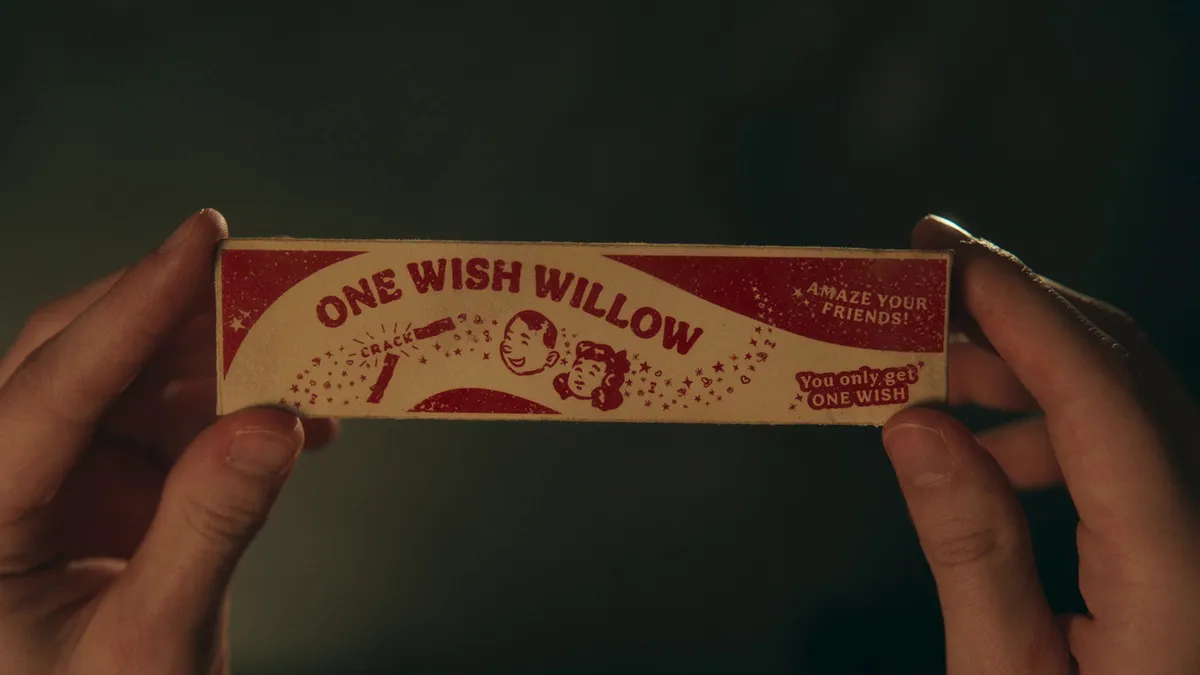
Whether or not this is a factor for Bear we will never know, however his decisions and behaviour at the store still tell us a lot about his character going forward. While it's clear that Bear himself knows little about crystals, he also doesn't seem to be aware of what Nikki's necklace looked like or what crystals she would even like; this is the first sign that he may not know that much about the woman he claims to love. Bear's ultimate purchase starts to shed light on his cowardly and selfish nature. Unwilling to risk buying her something she might dislike or put himself out there with a love crystal, he opts instead for the novelty One Wish Willow. As the audience, we know that this is a product that Bear would likely want (as we know what he'd wish for), but have had no indication that Nikki would want or enjoy it. This gives the impression of a selfish gift, more like Homer buying Marge a bowling ball so she'd immediately give it to him in the 'Life in the Fast Lane' episode of The Simpsons, and contributes to the impression that he does not consider Nikki, her personality and her likes and dislikes, completely separately to himself and his own experiences.
"I think Nikki is going through something."
Without the context of the rest of the film, many of these initial warning signs could easily be explained away by the viewer, and perhaps even being seen as innocent or harmless. However, once the willow is snapped, it becomes clear that Bear's feelings towards, and view of, Nikki are quite the opposite, and his actions become increasingly harder to justify.
The morality of the wish itself has been much debated online. It's clear from his interactions in the store and his impulsivity with the wish that Bear doesn't actually expect it to work, and therefore he didn't intentionally set out to own or control Nikki in that moment (unlike the men of Stepford plotting to replace their wives over a long period or Josh in Companion purchasing a companion bot). Plus, who among us hasn't at some point wished that someone we like would like us back? Still, the argument can also be made that someone's actions in the heat of a moment can be very telling about their character. Here we see Bear, having just been asked directly by Nikki whether he has feelings for her, not wishing to have that moment again, not wishing for the courage to confess in the future, and not even wishing to simply have a single date with her. Instead, he wishes that she would love him more than anyone else. Not only does this speak to Bear's entitlement towards Nikki, as he wants to 'win' her without putting in any effort or himself at risk of rejection, but also shows his lack of care about what she herself wants. This latter point is confirmed many times beyond this moment, such as when he ignores her wish to be killed after Wish Nikki has taken over, or when he only elects to ask Wish Nikki if she's happy once throughout the entire film. Ultimately, even though he doesn't truly intend to take away her autonomy in that exact moment, Bear's wish may reveal that his true desire is that Nikki cannot reject him.
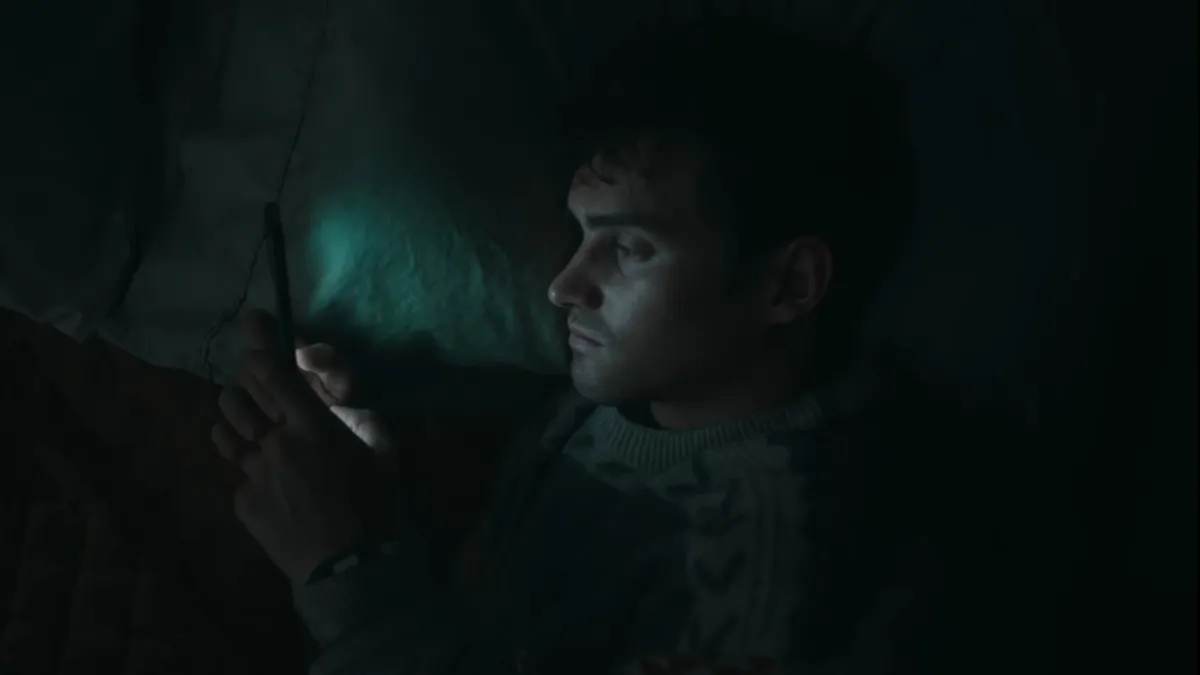
However, what makes Bear's true nature, entitlement and control towards Nikki the clearest are his actions and responses to her post-wish. While at first he doesn't know that the wish has worked, his willingness to look beyond Nikki's concerning behaviour is already cause for alarm. In the car immediately following his wish, she acts erratically, cannot tell herself apart from him, and tells him that her father is dying of cancer. Later at Bear's place, she screams and jolts backwards in the middle of kissing him, and after staying the night she creates a shrine using his dead cat's corpse. At work, their mutual friends also express concern over her behaviour. Even without the context of the wish, these signs alone should cause Bear to stop pursuing Nikki, as she's clearly unwell (or, more accurately, not herself). Even her excuse that she was on drugs shouldn't have appeased Bear in the way that it did, as he should've interrogated why she was using in the first place, especially given that she'd had a problem in the past. But instead, Bear is perfectly fine with ignoring these red flags and pursuing a romantic relationship with Nikki anyway, presumably because he feels he has finally 'won' the woman he feels entitled to. It's also interesting to note that Bear has to be told that Nikki is actually estranged from her (supposedly dying) father, further suggesting that he knows little about the woman he 'loves' and again indicating he was likely projecting onto her his own fantasy cool girl to have a crush on, rather than falling for the real Nikki.
"What's so bad about being with me?"
As Nikki's behaviour becomes more erratic, Bear's need for control over her intensifies. For example, his call with the One Wish Willow customer support agent, early on in Wish Nikki's dangerous behavioural spiral, already reveals his desire to police her actions. His initial question about whether he can "alter a wish" shows his desire to have his cake and eat it too - in this case, he wants a woman entirely devoted to and obsessed with him, but without all the creepy door-taping and dead-cat-feeding side effects. During this call, Bear learns that the Nikki he's been dating is a different entity from the real Nikki (who's trapped somewhere, screaming) and that the only way to reverse the wish is through his own death. Even armed with this knowledge, Bear chooses continued inaction, denial and control. Instead of attempting to discover alternative routes to free Nikki, he tries to diminish her outbursts, correct her behaviour, and focus on how she is scaring him. This shows that he values the manufactured romance with Wish Nikki, who can't reject him, over the happiness and autonomy of the real Nikki (the woman he was supposed to have 'loved'), who could potentially reject him.
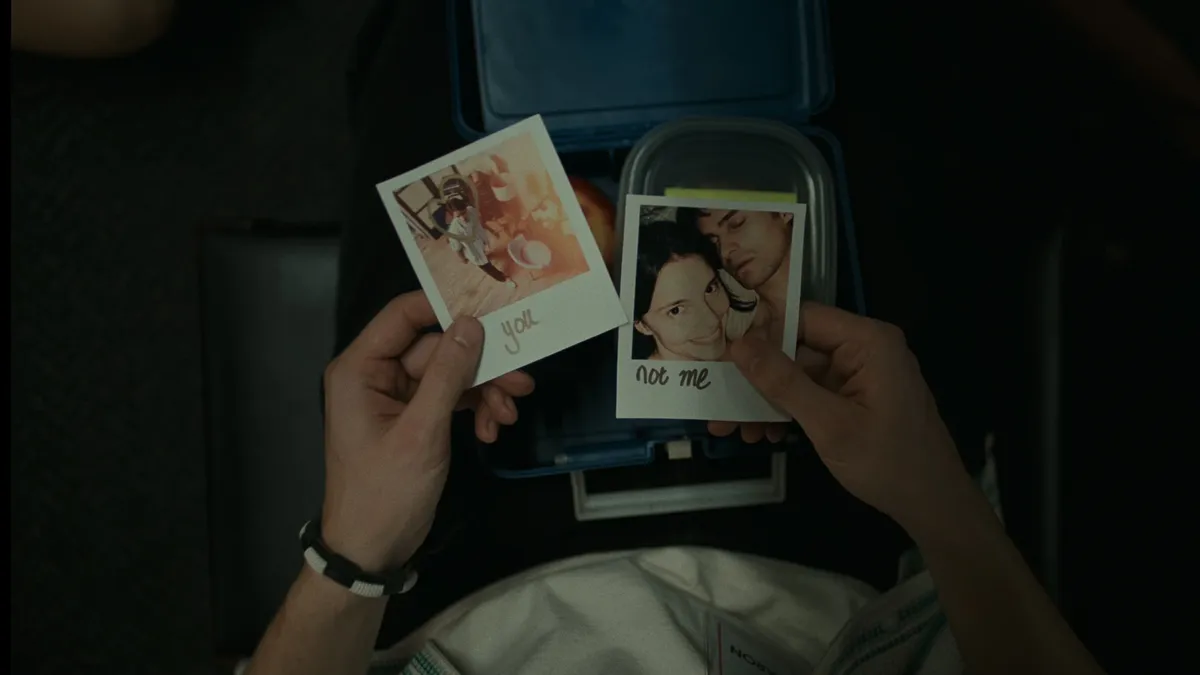
If there was any lingering doubt about Bear's true motives, these are truly shattered when the real Nikki briefly takes over and begs him for death. Despite this being a route out of this situation for both of them, his response, "What's so bad about being with me?", confirms that he is truly comfortable with stripping her of the ability to say no if it means he can 'have' her, even if that version of her isn't real. Ultimately, Bear never sees Nikki as a well-rounded human with flaws and thoughts and desires all of her own, but rather a prize to be won over and a blank canvas to boost his ego. He views her through a deeply patriarchal lens where women are rarely seen as whole people, instead being reduced down to their relation to a man. Therefore, in the same way that the husbands in The Stepford Wives rejected their modern, free-thinking, intelligent wives and replaced them with glorified sex dolls that do housework, Bear, too, never wanted an autonomous, real Nikki. Rather, he wanted an ego-boosting cool girl unable to say no upon whom he could play out his romance-movie fantasies. This is further highlighted by his contrasting relationship with Sarah, with whom he seems to genuinely see as an equal and then begin to experience something real with before her untimely and gruesome murder.
"You wished for this."
While Obsession features a number of interlinking and interesting themes, it's depiction of subtle patriarchal entitlement and control feels apt in the current gender climate. With the manosphere and its toxic, hypermasculine but ever-popular influencers teaching men and boys to dismiss, dominate and objectify women, and women themselves seemingly following a self-imposed regression by following the new 'tradwife' trend, it's easy to point to such extremes when discussing sexism and gender dynamics in the current decade. However, Obsession highlights how such attitudes are still entirely present in the mainstream. By situating the audience in Bear's perspective throughout, the film lays bare that everyday entitlement in a way that's equally as unsettling as the manosphere or trad wife stereotypes. Overall, despite the true jump scares, screams and spine-chilling moments, Obsession's real horror isn't the supernatural or the violence it enacts, but the recognition that the man continually choosing to keep this woman's agency from her isn't some distant caricature, but a reflection of attitudes many of us still quietly, perhaps even unconsciously, hold.